
Japan’s festivals are a summer delight, filling streets with music, dance, food stalls and lively crowds. These local celebrations often have religious or historical roots, many are sponsored by Shinto shrines or temples, but today they’re mainly big outdoor parties. In late summer and early autumn (often tied to harvest time or the Obon season), towns across Japan host matsuri featuring mikoshi (portable shrines), bon odori dances, taiko drumming, yukata-clad crowds, and endless rows of yatai (festival food stalls). Summertime in Japan means community parades in the warm evenings: a chance to don a yukata, grab a cold drink and some street food, and join in the dancing under lantern light.
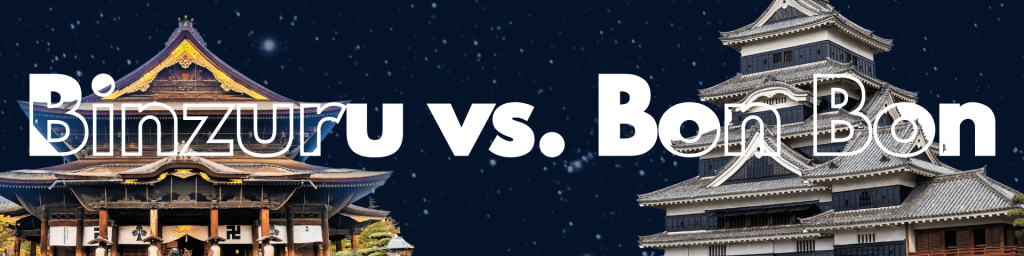
Nagano Prefecture is no exception. Among its many summer events, two large festivals stand out: Nagano City’s Binzuru Festival and Matsumoto City’s Bon Bon Festival. Both occur on the first Saturday of August, drawing thousands of locals and visitors into the streets for dance parades. Here, I’ll explore each festival’s history and character, compare their scale and style, and give travel tips for attending.
Binzuru
Nagano City’s Binzuru Festival (長野びんずる祭り) has become its largest summer street festival in the city. Held on the first Saturday of August (Obon season) each year, this Binzuru Dance Festival honors Binzuru (Pindola Bharadvaja), a legendary Buddhist disciple known for his healing powers. According to the tradition, Binzuru was one of the Buddha’s followers who offended him by showing off, but was later redeemed and asked to remain behind in the world to heal the sick. Zenko-ji Temple in Nagano enshrines a wooden statue of Binzuru that devotees rub for cures (the statue’s face and knees are famously worn smooth from centuries of touching). The festival’s parade dances around Zenko-ji Temple, linking the folk dance celebration with this centuries-old spiritual heritage.

The modern festival began in 1971 as a way to energize the city’s Obon festivities. Today it features over 200 dance troupes of all ages. The parade starts in the late afternoon and continues into the night. Huge crowds line the downtown streets (Chuo-dori and Showa-dori) as teams of dancers, in happi coats, t-shirts, and yukata, perform traditional the traditional Bon Odori routine. Many locals and visitors join in singing and clapping. No special entry fee or registration is needed to attend, just exit Nagano Station on the Zenkoji side and follow the enthusiastic crowds. If you’re interested in dancing in the parade, there are many groups you can sign up with!
Matsumoto Bon Bon Festival

Matsumoto’s Bon Bon Festival (松本ぼんぼん) is celebrated in Matsumoto City on the same day: the first Saturday in August. In fact, it’s officially the biggest summer festival in all of Nagano Prefecture. Bon Bon is a modern reinvention of an old Matsumoto Obon tradition. Historically, young women in the castle town would don paper flower crowns (bon-bon headgear), hold lanterns, and parade through the streets singing during Obon. The festival’s name and music (“Bon Bon, Matsumoto Bon Bon Bon!”) are drawn directly from that practice.
Today’s Matsumoto Bon Bon began in 1975 and has grown into a huge city-wide dance parade. Over 200 teams participate each year. Starting around 5:30 pm, the teams march and dance through downtown Matsumoto, from the east side of JR Matsumoto Station all the way to Matsumoto Castle. Each group wears a unique costume (ranging from samurai to pop themes) and performs choreographed moves to the festival song. Large floats, drums and speakers line the route. Spectators pack the sidewalks and streets, clapping and cheering as the colorful parade advances.
The atmosphere is like a giant block party. Streets are closed to vehicles (signs go up around 4:50 pm, so it’s best to arrive on foot). By 6:00 pm, lanterns light up the street and an MC on loudspeakers fires up the crowd. The dance troupes move in waves, and the catchy Bon Bon song gets everyone singing “Bon Bon, Matsumoto Bon Bon” together.
Bon Bon vs. Binzuru
While both festivals are summer night dances, they differ in flavor:
- Location & Route: Binzuru winds through Nagano’s downtown toward Zenko-ji Temple. Matsumoto Bon Bon spans the central city core between the train station and Matsumoto Castle. Both are very accessible by public transport (each is a 5–15 minute walk from the respective station).
- Origins & Meaning: Binzuru honors a Buddhist legend (a spiritual commemoration tied to Zenko-ji). Bon Bon is rooted in secular Obon folk customs (a revival of a local singing-dance tradition).
- Participation & Scale: Both mobilize around 200 dance groups. Binzuru bills itself as Nagano City’s “first and largest” summer matsuri. Bon Bon is promoted as Nagano Prefecture’s largest summer event.
- Dance Style: Binzuru’s dances are traditional and participatory, the crowd is encouraged to dance or clap along in the street. Bon Bon’s dance is a choreographed performance. At Binzuru anyone can step in in the evening; at Bon Bon only the organized ren teams (and invited participants) dance the official routine.
- Atmosphere: Both are festive and family-friendly. Binzuru has a warm, communal Obon vibe, think friendly neighborhood block party around the temple, with generational crowds. Bon Bon feels like a carnival: highly organized, music-driven, with elaborate costumes.
- Unique Highlights: Only at Binzuru do dancers actually end up at Zenko-ji to honor Binzuru’s statue. Only at Bon Bon do you hear the city’s signature “Bon Bon” song echo through the streets and see the themed headpieces and lanterns. The Bon Bon festival also includes a formal awards ceremony, reflecting its competitive elements.
Travel Guide
Both festivals happen in the evening of the first Saturday in August, so it will be impossible to visit both on the same day. Both parades will shut down streets at the city centers, however they are easily accessable via Nagano Station or Matsumoto Station. Nagano Station is served by the Hokuriku Shinkansen and several limited express lines. Matsumoto is on the JR Chuo Line (no Shinkansen), reachable by limited express from Nagano City or Tokyo.
Expect dozens of community dance teams moving steadily through the city. You’ll see taiko drums, lanterns, and dancers in happi coats or yukata. The atmosphere is upbeat and welcoming: spectators clap along or even join the line dances in the street. Street food stalls will line some roads (yakisoba, popcorn, kakigori shaved ice, etc.). Since it’s an Obon event, many locals in families attend. The festivals are free to the public.
Because these events are popular local events, it’s best to arrive early. If you’re in Nagano City for the day, I recommend checking out Zenko-ji Temple early and seeing what the nearby shops have to offer. If you’re in Matsumoto for the day, you can visit Matsumoto Castle, as well as check out the shops on Nawate Street. Additionally, I would always recommend travelers visiting the local art museums: Nagano Prefectural Art Museum and Matsumoto City Museum of Art.
Other Notable Summer Festivals in Nagano
Nagano Prefecture is rich in summer events beyond Binzuru and Bon Bon:
- Suwa Fireworks Festival (諏訪湖祭湖上花火大会): Held on August 15th over Lake Suwa. It’s famously the largest fireworks show in Japan, with about 40,000 shells lighting the sky for half a million spectators. The lake makes an ideal viewing stage: crowds line its shores and the echoes from the mountains are spectacular.
- Okaya Taiko Festival: Mid-August (usually around 3rd weekend) in the city of Okaya (Suwa region). This two-day festival showcases hundreds of taiko drummers. Local history notes that warlord Takeda Shingen once used Okaya drummers in battle to motivate his troops. Today, up to 300 drummers perform together in thrilling ensembles that “shake heaven and earth”. The communal taiko performance is a highlight of the day: massive drum stage on one day, taiko parades the next.
- Seiji Ozawa Matsumoto Festival: Mid-August through early September, centered in Matsumoto. Founded by conductor Seiji Ozawa in 1992, this is a classical music festival (Saito Kinen Orchestra and guest artists) held in an open-air theater. It’s a world-class symphony concerts under the stars that contrasts with Nagano’s folk events.
- Zenko-ji Temple Summer “Ennichi” (善光寺お盆縁日): Mid-August, Nagano City. A traditional bon-odori dance festival right in the courtyard of Zenko-ji. Held every Obon season (usually August 13–15), it welcomes ancestral spirits with folk dancing around a central stage. Everyone joins in the circle dances with Buddhist chants.
- Azumino Fireworks Festival: August 14th in Azumino City (central Nagano). With about 12,000 fireworks, it’s the third-largest fireworks display in the prefecture.
- Others: Late-August brings minor festivals like the Obuse “Hoto” noodle festival, or Matsumoto City’s “Ghost Festival” of Hyakken (Burning old houses). Many towns also hold summer night markets and Bon Odori events in early August.
Have A Great Summer!
No matter when you visit Nagano in summer, you’ll likely find a lively local matsuri. From the pulsating Bon Bon parade under the castle to the communal dances on Zenkoji’s steps, these festivals offer a chance to experience Japanese tradition up close, with plenty of dancing, snacks, and friendly locals to enjoy.


 Sid in Japan
Leave a comment